Infectious disease diagnostics heavily rely on the accuracy and reliability of PCR (Polymerase Chain Reaction) tests, which detect the presence of specific pathogens in biological samples. To ensure the robustness and reproducibility of PCR-based assays, Quality Control (QC) measures are implemented at every stage of testing. These QC processes are essential for clinical laboratories that diagnose infections caused by viruses, bacteria, fungi, or parasites.
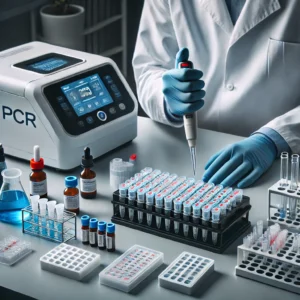
Importance of PCR Quality Control
PCR is a highly sensitive technique, but it can be vulnerable to various factors that may affect test accuracy, such as:
- Contamination: Amplification of non-target DNA or carryover from previous tests can lead to false positives. Implementing environmental controls and stringent laboratory practices help mitigate contamination risks, as discussed in protocols from CDC (cdc.gov).
- Inhibitors: Substances like hemoglobin, bile salts, or urea present in clinical samples may interfere with PCR amplification, leading to false negatives. Labs must validate their extraction and purification methods to ensure inhibitor removal, a process frequently mentioned by NIH (nih.gov).
- Reagent Quality: Using high-quality reagents ensures consistent performance. Studies from NIST (nist.gov) have highlighted the impact of reagent variability on PCR outcomes.
Effective quality control protocols reduce errors, enhance diagnostic accuracy, and improve patient outcomes by providing reliable detection of infectious agents.
Types of PCR Quality Controls
- Internal Controls: These are included in every sample run to monitor for possible PCR inhibition or failure of the assay. An internal control helps confirm that a negative result is not due to a failed reaction but is a true negative. Explore the FDA’s guidelines for internal controls in clinical diagnostics (fda.gov).
- Positive Controls: A known positive sample or reference material is used to ensure the assay is working correctly and that the target DNA/RNA can be detected. This is essential in verifying the sensitivity of the assay. Johns Hopkins University provides examples of how positive controls are implemented in pathogen detection assays (hopkinsmedicine.org).
- Negative Controls: These are included to detect any contamination or false-positive results. A negative control usually contains no target DNA, ensuring that a PCR reaction remains free from unintended amplification. Stanford University offers protocols for effective negative control usage in infection diagnostics (stanford.edu).
- External Quality Assurance (EQA): Participating in proficiency testing programs, such as those provided by WHO (who.int), allows laboratories to assess their PCR performance by analyzing standardized samples and comparing results with other labs.
Applications in Infectious Disease Testing
Quality control is critical across a variety of PCR-based tests for infectious diseases, including:
- COVID-19 Diagnostics: PCR has been the gold standard for detecting SARS-CoV-2. Many clinical labs use PCR QC standards established by the FDA and CDC to validate their tests for mass screening (fda.gov, cdc.gov).
- Tuberculosis: Molecular diagnostics for Mycobacterium tuberculosis rely on robust PCR quality controls to ensure accurate detection, especially in low-resource settings. Global TB Program resources from WHO highlight the importance of QC in controlling TB epidemics (who.int).
- Sexually Transmitted Infections (STIs): PCR assays for Chlamydia, Gonorrhea, and HPV must include stringent quality controls to avoid misdiagnosis and ensure timely treatment. Learn more about STI molecular diagnostics from NIH (nih.gov).
- Bloodborne Pathogens: PCR assays for HIV, Hepatitis B, and Hepatitis C require high sensitivity and accurate QC protocols to detect low viral loads. NCI’s research into HIV diagnostics focuses on improving PCR QC to support early detection (cancer.gov).
Best Practices for PCR QC Implementation
To implement effective quality control in infection disease diagnostics, laboratories should:
- Validate Assays: Ensure that PCR tests are validated with both internal and external controls before use in clinical settings. Guidelines from the CLIA (cms.gov) provide standards for laboratory validation of molecular diagnostics.
- Monitor Contamination: Implement separate workstations for different stages of the PCR process—sample preparation, PCR setup, and post-PCR handling—to minimize contamination risks.
- Proficiency Testing: Regularly participate in proficiency testing and EQA programs to assess assay performance and maintain accreditation. Programs like those offered by CAP (cap.org) help labs maintain high-quality standards.
Conclusion
Quality control in PCR assays for infectious disease detection is critical for maintaining the reliability and accuracy of diagnostic results. Whether detecting pathogens like SARS-CoV-2, HIV, or Chlamydia, stringent QC measures reduce the risk of errors, ensuring that test results are accurate and actionable. Laboratories must adhere to QC guidelines from global health authorities and regularly participate in EQA programs to stay ahead of emerging infections and maintain the highest diagnostic standards.
For more detailed QC protocols, visit resources from Harvard Medical School (harvard.edu) and NIH (nih.gov).